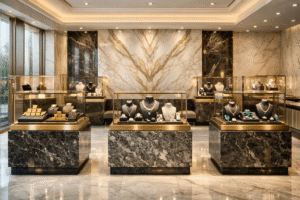


Italian marble journey from Italy to India is much more than the transportation of natural stone. Instead, it is a remarkable story of geological formation, historic quarrying, expert selection, advanced processing, international transportation, architectural planning, and skilled craftsmanship.
Every Italian marble slab begins its journey deep within the mountains of Italy. Over millions of years, natural heat, pressure, minerals, and geological movement create unique backgrounds, veins, patterns, and crystalline textures.
After quarry experts extract the marble, skilled teams inspect, cut, polish, pack, and transport it to India. Therefore, every finished slab passes through several important stages before it becomes part of a luxury home, villa, hotel, resort, office, or commercial project.
At Bhandari Marble Company in Kishangarh, Rajasthan, architects, interior designers, builders, developers, hoteliers, engineers, project consultants, and luxury homeowners can explore premium Italian marble through full-slab displays and complete-lot selections.
With a natural-stone legacy associated with Italian marble in India since 1969, Bhandari Marble Company continues to connect Italy’s historic marble heritage with the changing needs of luxury architecture in India.
Where the Italian Marble Journey Begins
The Italian marble journey begins in the marble-producing mountains of Italy.
For centuries, people around the world have admired Italy for its natural stone, sculpture, architecture, quarrying skills, and marble-processing traditions. In particular, Carrara remains one of the most recognised marble-producing regions because of its elegant white and grey stones.
However, Italian marble does not come from one quarry alone. Different regions, mountains, and quarry sections produce stones with different colours, mineral structures, vein movements, textures, and visual characteristics.
As a result, every Italian marble variety offers a different design identity.
Popular Italian Marble Varieties Include
- Italian Statuario Marble
- Calacatta Gold Marble
- Carrara White Marble
- Venatino Marble
- Michelangelo Marble
- Botticino Marble
- Italian Grey Marble
- Italian Beige Marble
Every marble block has its own natural identity. Moreover, even slabs cut from the same block may show small differences in vein direction, background shade, mineral markings, and natural movement.
These differences are not defects. Instead, they are part of the authenticity and natural beauty of marble.
How Italian Marble Is Formed
Intense heat and pressure beneath the earth’s surface transform limestone into marble.
During this natural process, the stone recrystallises. At the same time, minerals move, combine, and settle within the stone. As a result, they form the veins, clouds, colours, and artistic patterns that become visible in the finished marble.
This geological process takes place over millions of years.
The final character of Italian marble depends on several natural factors, including:
- Mineral composition
- Geological pressure
- Temperature
- Natural fractures
- Crystallisation
- Movement within the earth
Because this entire process occurs naturally, no two marble slabs are exactly identical. Therefore, Italian marble remains highly valued in luxury homes, villas, hotels, resorts, commercial buildings, and prestigious architectural projects.
Its natural variation gives every project a unique and exclusive appearance.
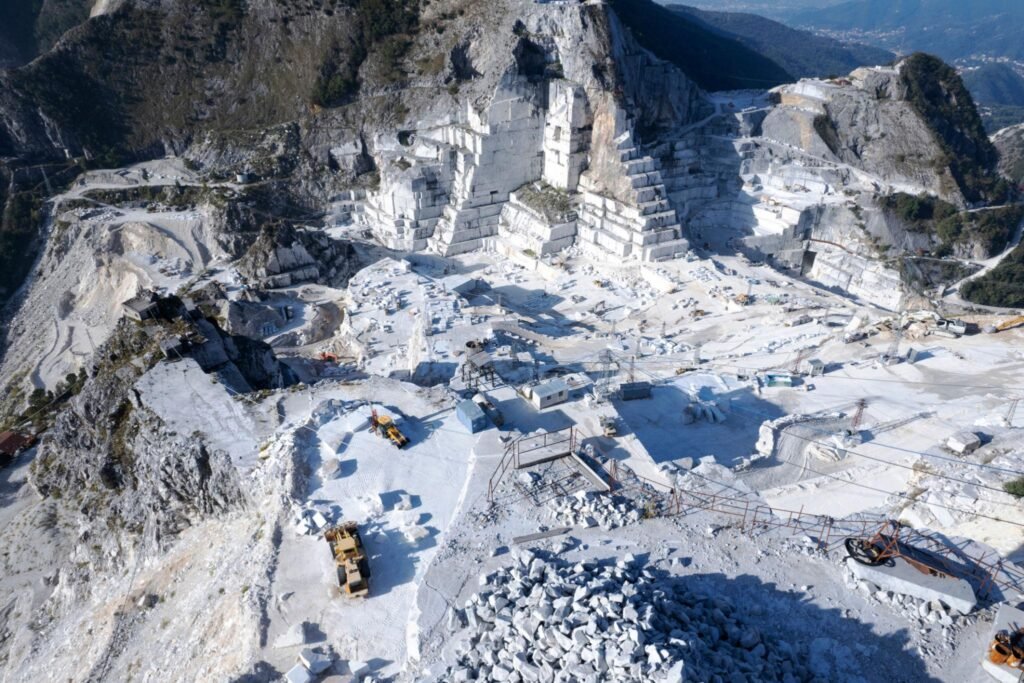
Quarrying Italian Marble from the Mountains
Quarrying Italian marble requires planning, precision, advanced machinery, and extensive experience.
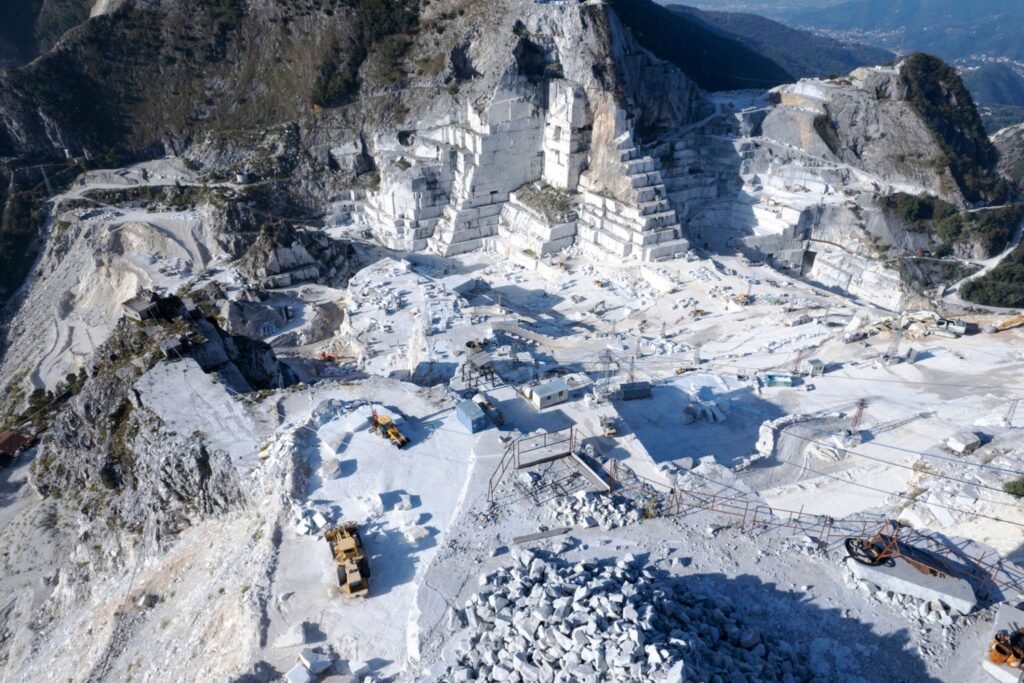
First, quarry experts inspect the geological formation of the mountain. They also identify suitable sections for safe and efficient extraction. Next, specialised cutting equipment separates large marble blocks from the mountain.
The team must handle each block carefully because uncontrolled pressure can damage the stone or disturb its natural pattern.
The Italian Marble Quarrying Process
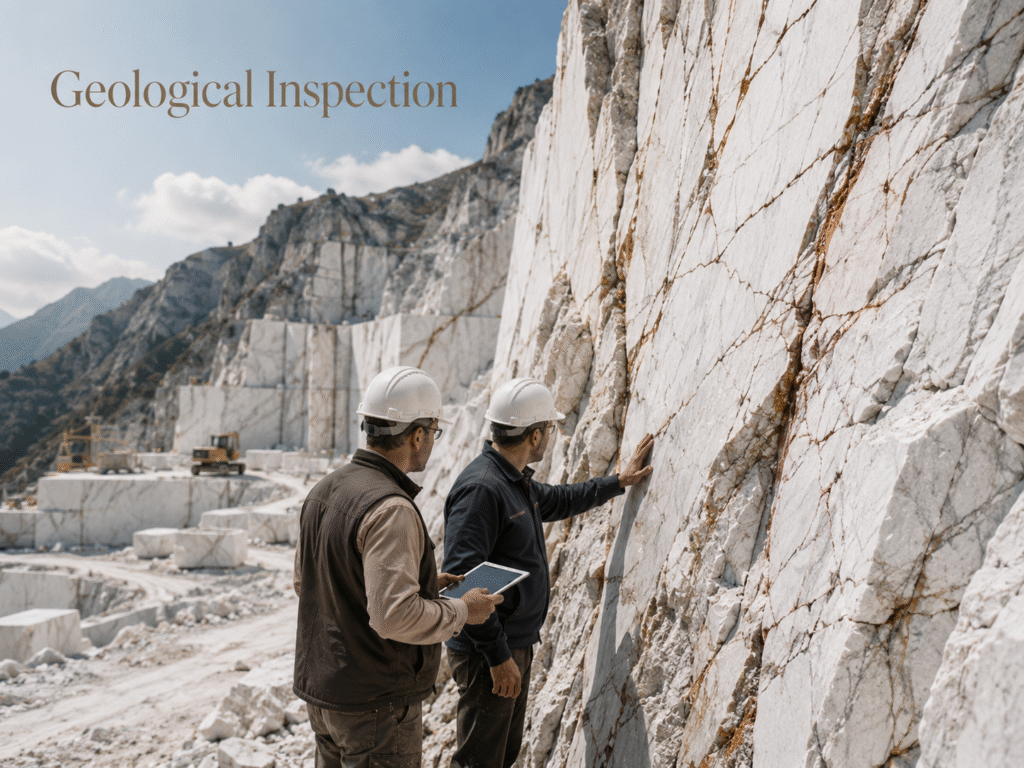

Geological Inspection:
Experts examine the mountain’s structural stability, mineral quality, colour, pattern, and natural formation.
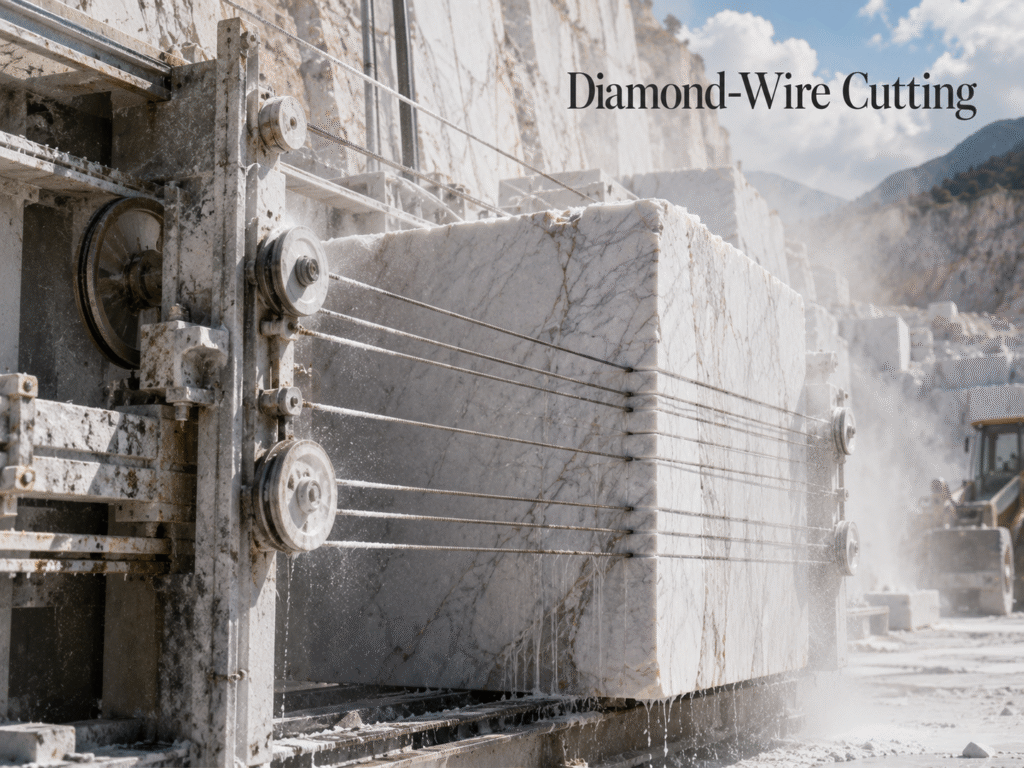
Diamond-Wire Cutting:
Specialised diamond-wire machinery cuts precisely through dense mountain rock.
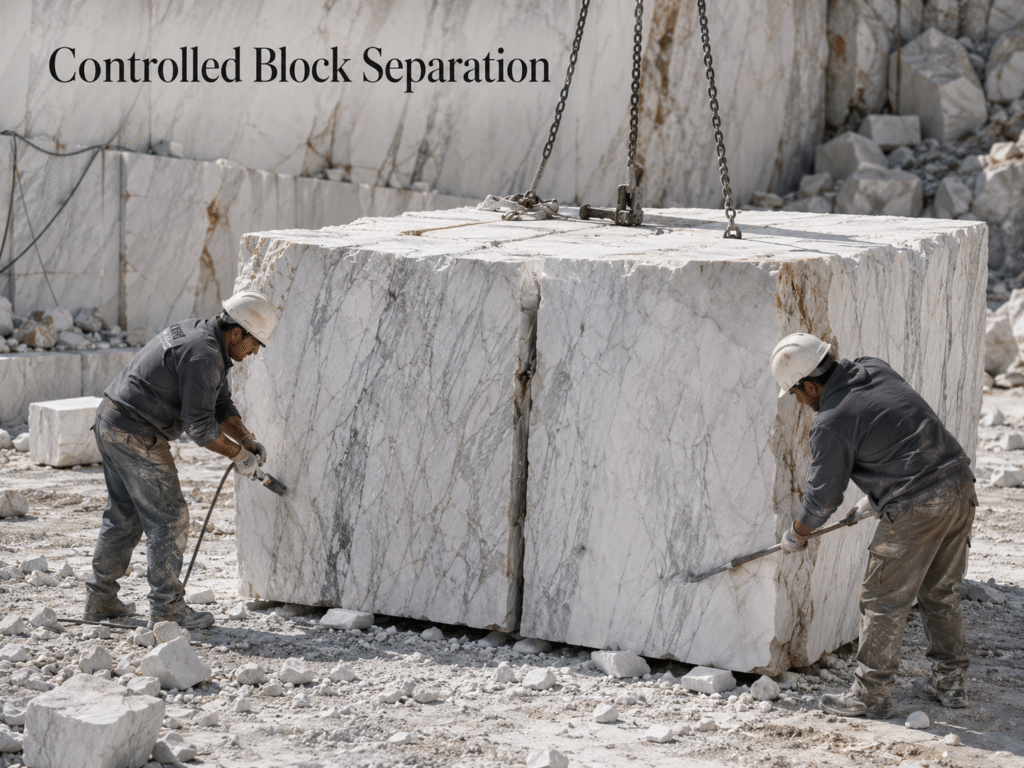
Controlled Block Separation:
The quarry team separates the marble blocks carefully to prevent cracks and unnecessary damage.
Heavy-Equipment Handling:
Heavy machinery safely lifts and moves the massive marble blocks out of the quarry.
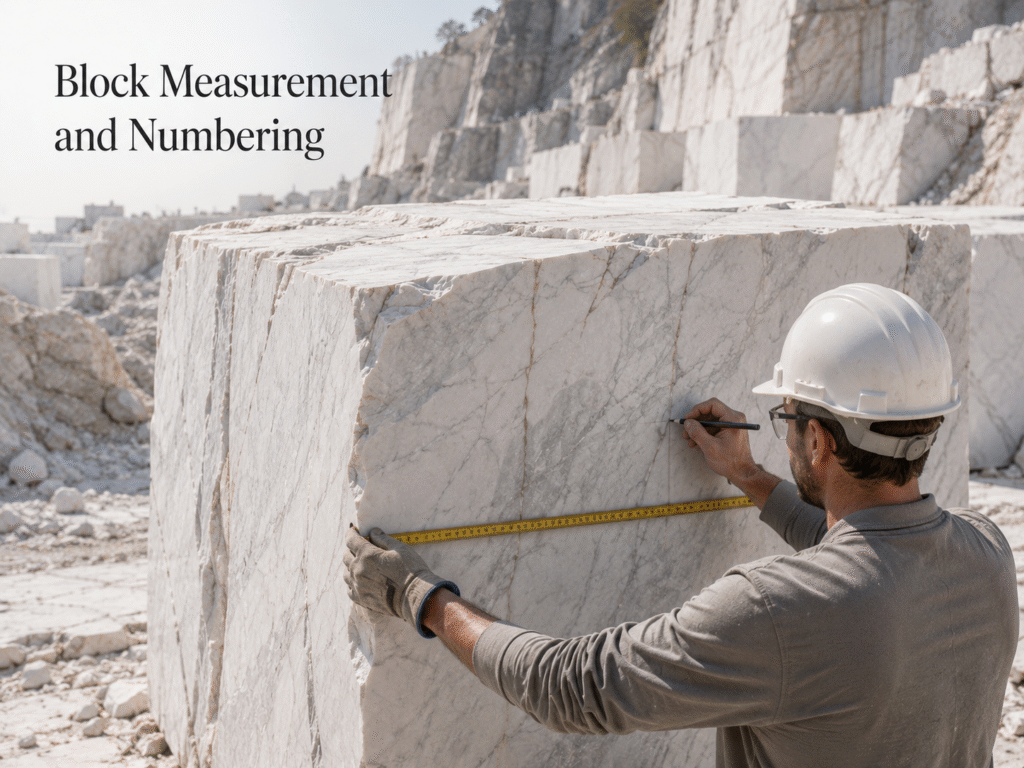
Block Measurement and Numbering:
Experts measure, number, and record each block for identification and traceability.
The main objective is to extract the largest usable marble block while protecting its structural quality and natural beauty.
Consequently, larger blocks can produce larger slabs with better vein continuity. These slabs work especially well for grand architectural applications such as villa flooring, hotel lobbies, double-height walls, luxury bathrooms, staircases, reception areas, and book-matched installations.
The Art of Selecting Premium Italian Marble
Not every marble block offers the same quality, pattern, size, or architectural value. Therefore, premium Italian marble selection requires knowledge, experience, patience, and a trained eye.
Stone experts examine each block and slab before recommending it for a project.
Important Factors in Italian Marble Selection
Background Colour:
Italian marble backgrounds may appear bright white, soft white, ivory, cream, beige, grey, or multicoloured.
Vein Movement:
The veins may look bold, fine, flowing, linear, cloud-like, grey, golden, brown, or highly artistic.
Block and Slab Size:
Larger blocks produce bigger slabs and customised dimensions. Therefore, they suit hotel lobbies, large floors, double-height walls, and reception areas.
Structural Quality:
Experts examine the marble for natural lines, surface openings, stability, thickness, and overall strength.
Book-Matching Potential:
Two consecutive slabs can open like the pages of a book. As a result, they create a mirrored vein pattern that resembles a natural work of art.
Proper selection ensures that the marble suits the design concept, application area, required quantity, and project budget.
From Raw Marble Blocks to Finished Slabs
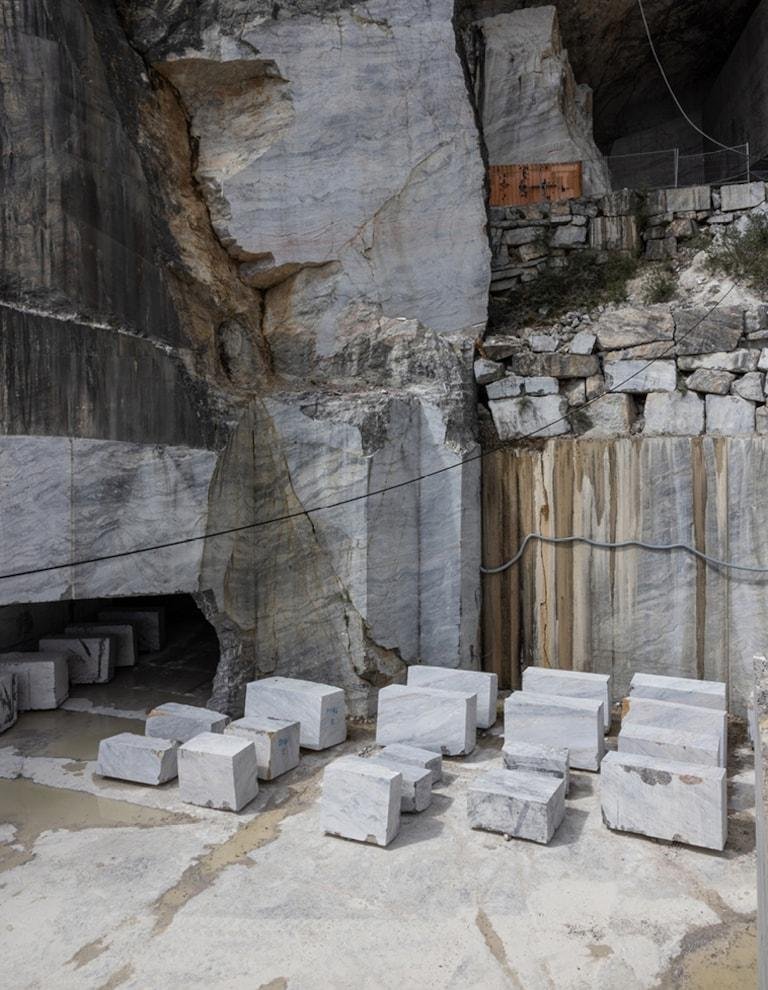
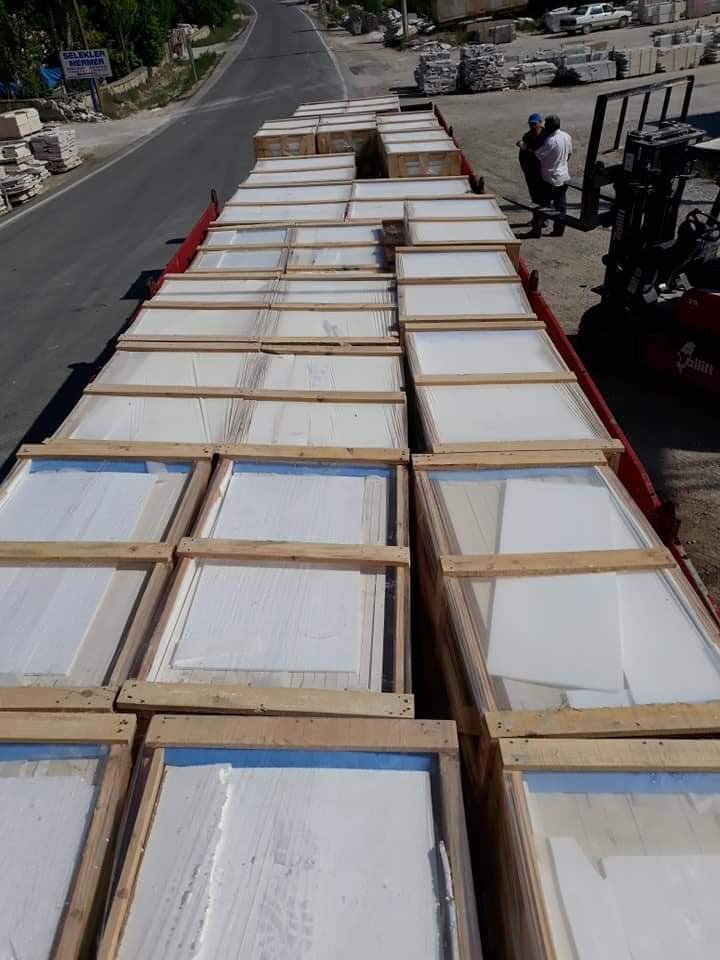
After selection, the raw marble blocks travel to specialised processing facilities. There, advanced machinery cuts them into slabs.
However, block cutting is only one part of the process. The marble also passes through reinforcement, surface treatment, polishing, inspection, and packaging stages.
Italian Marble Processing Stages
- Block cutting and calibration
- Resin treatment and mesh reinforcement
- Surface grinding
- Polishing or honing
- Thickness inspection
- Slab numbering
- Quality checking
- Protective packaging
Resin treatment can help fill small natural openings in the marble. Similarly, mesh reinforcement provides additional support to certain slabs during processing, transportation, fabrication, and installation.
Slab numbering is also important. It helps architects, designers, fabricators, and installers plan vein continuity, flooring patterns, book-matching, wall elevations, staircases, and large interior layouts.
Italian Marble Surface Finishes
The selected surface finish changes the appearance, texture, shine, grip, and maintenance requirements of the marble.
Therefore, architects and homeowners should select the finish according to the design style and application area.
Polished Finish
A polished finish creates a smooth, glossy, and reflective surface. It also enhances the natural colour and vein movement of the marble.
Therefore, polished Italian marble is commonly used for:
- Luxury flooring
- Feature walls
- Hotel lobbies
- Living rooms
- Reception areas
- Grand interiors
Honed Finish
A honed finish feels smooth but appears less reflective than polished marble.
As a result, it creates a soft and contemporary appearance. It is suitable for modern homes, minimalist interiors, bathrooms, walls, and selected flooring areas.
Leather Finish
A leather finish adds a soft and subtle texture to the stone.
Designers commonly use it for feature walls, bar counters, furniture, table surfaces, and statement interior elements.
Antique Finish
An antique finish creates a traditional and aged appearance.
Therefore, it complements classical villas, heritage interiors, traditional architecture, and decorative design concepts.
The Italian Marble Journey from Italy to India
Once the processing team inspects and finishes the slabs, they prepare them for international transportation.
Natural marble requires professional packing because improper handling may damage the polished surface, edges, veins, and structural quality.
First, the team numbers and covers the slabs. Next, it packs them securely and loads them into containers. The containers then travel from Italy to India through international shipping routes.
After the marble reaches India, the team transports it to Kishangarh, Rajasthan.
There, experts inspect the slabs again, organise them according to blocks and lots, and prepare them for client selection.
At Bhandari Marble Company, buyers can explore Italian marble alongside imported marble, Indian marble, granite, quartzite, onyx, travertine, and exotic natural stones.
Why Kishangarh Is an Important Marble Destination
Kishangarh is one of India’s most important centres for marble, granite, imported stone, manufacturing, processing, and project supply.
The city offers access to a wide range of natural stones for residential, hospitality, commercial, and large architectural projects.
At Bhandari Marble Company, visitors can evaluate:
- Background colour
- Vein structure
- Slab size
- Thickness
- Surface finish
- Natural variation
- Book-match potential
- Available quantity
- Application suitability
- Complete project requirements
Therefore, buyers gain a clearer understanding of how the selected marble may look after fabrication and installation.
Why Full-Slab Inspection Matters
A small marble sample cannot represent the complete character of a natural slab.
A sample may show only a limited section of the background and veins. In contrast, full-slab inspection allows buyers to examine the marble’s complete movement and appearance.
Full-slab inspection helps buyers check:
- Complete vein movement
- Background consistency
- Natural colour variation
- Surface quality
- Slab dimensions
- Book-match possibilities
- Natural markings
- Overall visual impact
As a result, architects, designers, and homeowners can make a more informed selection.
Popular Italian Marble Varieties for Luxury Interiors
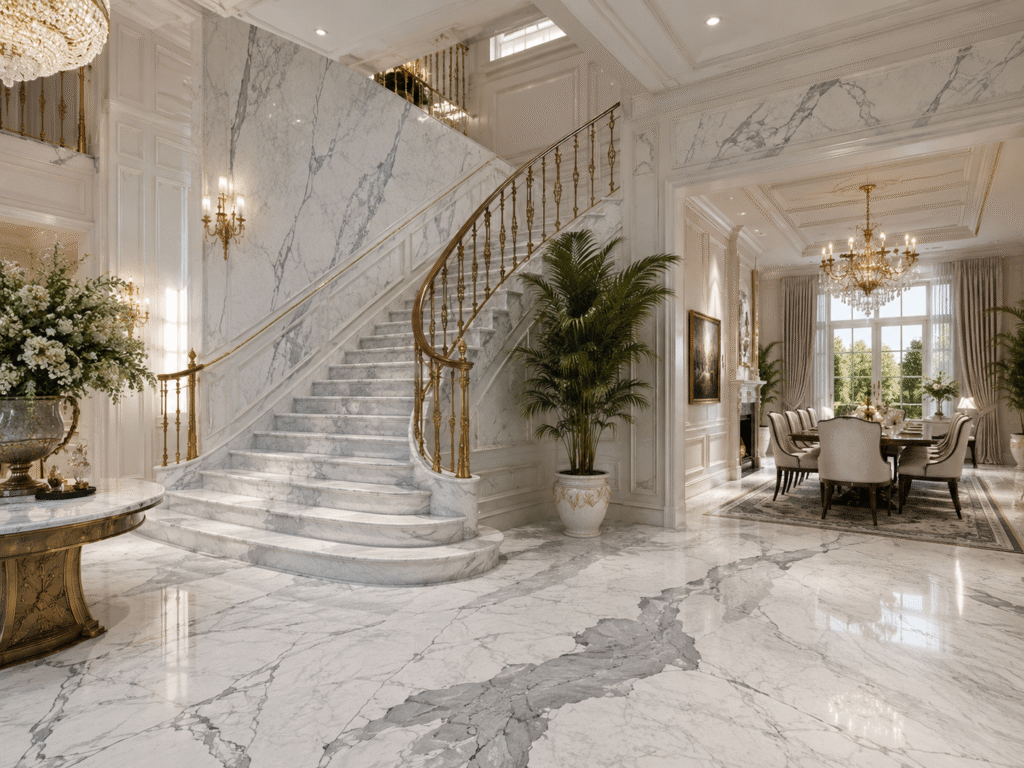


Italian Statuario Marble
Italian Statuario Marble features an elegant white background with distinctive grey veins.
Designers widely use it for luxury villa flooring, feature walls, grand bathrooms, staircases, reception areas, and hotel lobbies.
Its clean background and expressive veins create a refined and luxurious appearance.
Calacatta Gold Marble
Calacatta Gold Marble combines a white background with expressive grey and golden veins.
As a result, it creates a warm, artistic, and prestigious appearance. It works beautifully for kitchen islands, living rooms, walls, bathrooms, and statement interior applications.
Carrara White Marble
Carrara White Marble usually features a soft white or light-grey background with fine grey veins.
Therefore, its subtle appearance suits minimalist homes, contemporary villas, bathrooms, flooring, walls, and modern commercial interiors.
Botticino Marble
Botticino Marble features a warm beige background with soft and subtle natural markings.
Therefore, it complements classical interiors, traditional villas, hotel spaces, flooring, walls, and elegant architectural designs.
Italian Marble Applications Across Architecture and Design
Italian marble offers flexibility for residential, hospitality, commercial, and architectural applications.
However, the final selection should match the application area, design style, traffic level, maintenance needs, and project budget.
Luxury Homes and Villas
Italian marble can enhance:
- Entrance foyers
- Living rooms
- Dining rooms
- Bedrooms
- Family lounges
- Bathrooms
- Kitchens
- Staircases
The right marble selection can create visual continuity across different areas of a home.
Hotels and Resorts
Hotels and resorts use Italian marble in:
- Grand lobbies
- Reception counters
- Lift lobbies
- Luxury suites
- Guest bathrooms
- Restaurants
- Banquet halls
- Ballrooms
- Spa areas
Moreover, complete-lot selection can help create better colour and vein consistency across large hospitality projects.
Corporate and Commercial Spaces
Italian marble also works well in:
- Reception areas
- Boardrooms
- Executive cabins
- Conference tables
- Lift lobbies
- Luxury retail stores
- Commercial feature walls
Its natural character helps create an elegant and professional environment.
Support for Architects, Designers, Builders, and Developers
Professional projects require more than visually attractive marble.
They also need the right quantity, suitable slab dimensions, correct finishes, coordinated fabrication, and dependable supply.
Therefore, proper planning is important from material selection to final dispatch.
Bhandari Marble Company Supports Professionals With
- Full-slab inspection
- Complete-lot comparison
- Marble selection
- Book-match planning
- Slab mapping
- Flooring layouts
- Wall-elevation planning
- Staircase design
- Surface-finish selection
- Quantity calculation
- Customised cutting
- Packaging and dispatch coordination
This professional support helps architects, designers, builders, and developers select marble according to the needs of each project.
Caring for Italian Marble
Correct maintenance can preserve the natural beauty of Italian marble for many years.
Although marble offers lasting elegance, it requires suitable cleaning products and regular care.
Italian Marble Maintenance Tips
- Clean spills immediately with a soft cloth or mop.
- Use a pH-neutral natural-stone cleaner.
- Keep the marble surface dry and clean.
- Use mats in high-traffic entrance areas.
- Apply a suitable sealant when recommended.
- Arrange professional polishing when required.
Products to Avoid on Italian Marble
Avoid using:
- Vinegar
- Lemon-based cleaners
- Acids
- Harsh chemicals
- Abrasive powders
- Metal scrubbers
These products may damage the marble surface, reduce its shine, or create visible marks.
Why Choose Bhandari Marble Company?
Legacy
Bhandari Marble Company has an association with Italian marble in India since 1969.
Extensive Natural-Stone Collection
Visitors can explore Italian marble, imported marble, Indian marble, granite, quartzite, onyx, travertine, and exotic natural stones.
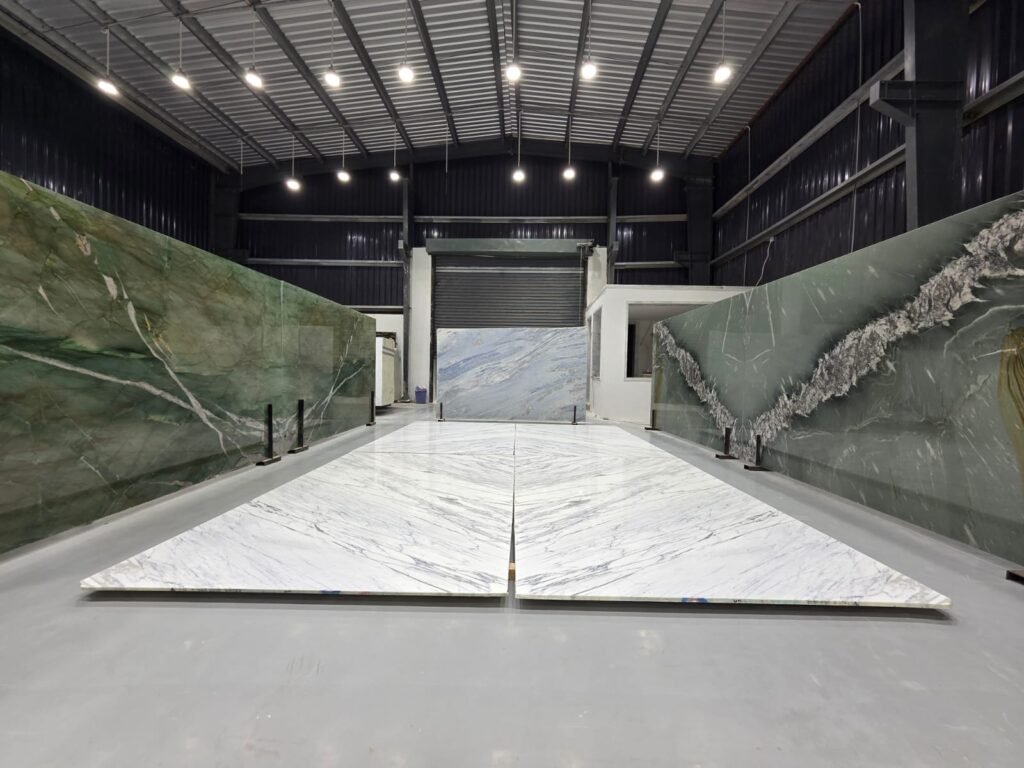
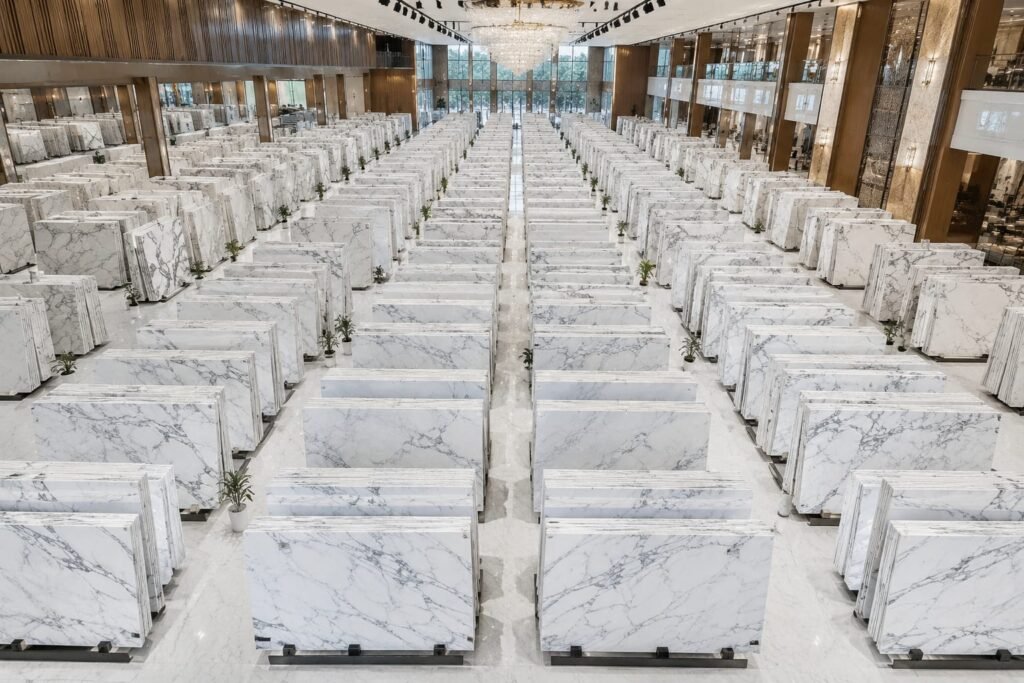
Full-Slab Display
Buyers can inspect complete slabs instead of relying only on small samples.
Complete-Lot Selection
Complete-lot selection can improve colour and vein consistency across large flooring, wall, hospitality, and commercial projects.
Expert Consultation
Architects, interior designers, builders, developers, project consultants, and homeowners can receive assistance with marble selection, applications, finishes, dimensions, and quantity planning.
Customised Processing
Available project support may include customised cutting, polishing, honing, book-matching, staircases, countertops, and other architectural requirements.
Visit Bhandari Marble Company in Kishangarh
Architects, interior designers, builders, developers, hoteliers, engineers, project consultants, and luxury homeowners can visit Bhandari Marble Company in Kishangarh, Rajasthan.
Visitors can explore premium Italian marble through full-slab displays, compare complete lots, review book-match possibilities, understand natural variations, and receive guidance for their next architectural project.
The Italian marble journey from Italy to India connects natural geological beauty, historic Italian quarrying, advanced processing, careful transportation, professional selection, and skilled architectural planning.
Therefore, choosing the right marble is not only about selecting a colour. It is also about understanding the slab’s origin, pattern, structure, finish, size, quantity, and suitability for the intended application.
Frequently Asked Questions About the Italian Marble Journey
1. Where does Italian marble come from?
Italian marble comes from different quarrying regions across Italy. Carrara is one of the most famous and historic marble-producing areas. In particular, the region is known for its premium white and grey stones.
2. Why is Italian marble considered luxurious?
Italian marble is highly valued for its natural veining, crystalline structure, historic quarrying traditions, advanced processing, and timeless appearance. Together, these qualities can enhance luxury architectural spaces.
3. Which Italian marble is best for luxury interiors?
Popular options include Italian Statuario, Calacatta Gold, Carrara White, Arabescato, Venatino, and Botticino. However, the right choice depends on the design concept, application area, required quantity, and project budget.
4. Is Italian marble suitable for flooring?
Yes. Architects and designers use Italian marble for flooring in luxury homes, villas, hotels, corporate offices, and commercial projects. However, buyers should select the marble variety, thickness, finish, and maintenance plan according to the application.
5. What is book-matched marble?
Book-matching is a design technique in which installers open two consecutive slabs like the pages of a book. As a result, the slabs create a symmetrical and mirrored vein pattern.
6. Why should buyers inspect full marble slabs?
Full-slab inspection allows buyers to evaluate the complete vein movement, background consistency, natural colour variation, surface quality, and slab dimensions. Therefore, it provides a clearer view than a small sample.
7. Does Bhandari Marble Company supply marble for large projects?
Yes. Bhandari Marble Company supplies natural stone for projects such as luxury villas, hotels, resorts, commercial buildings, clubhouses, and residential developments.
8. Can architects and designers receive marble-selection support?
Yes. Architects, interior designers, and project consultants can receive support for slab selection, book-matching, layouts, finishes, custom dimensions, and quantity calculations.
9. How should Italian marble be cleaned and maintained?
Clean Italian marble using a soft cloth or mop and a pH-neutral natural-stone cleaner. In addition, avoid vinegar, lemon-based cleaners, harsh chemicals, acidic substances, and abrasive scrubbers.
10. Where is Bhandari Marble Company located?
Bhandari Marble Company is located in Kishangarh, Rajasthan, one of India’s leading centres for marble, granite, imported stone, processing, and natural-stone supply.